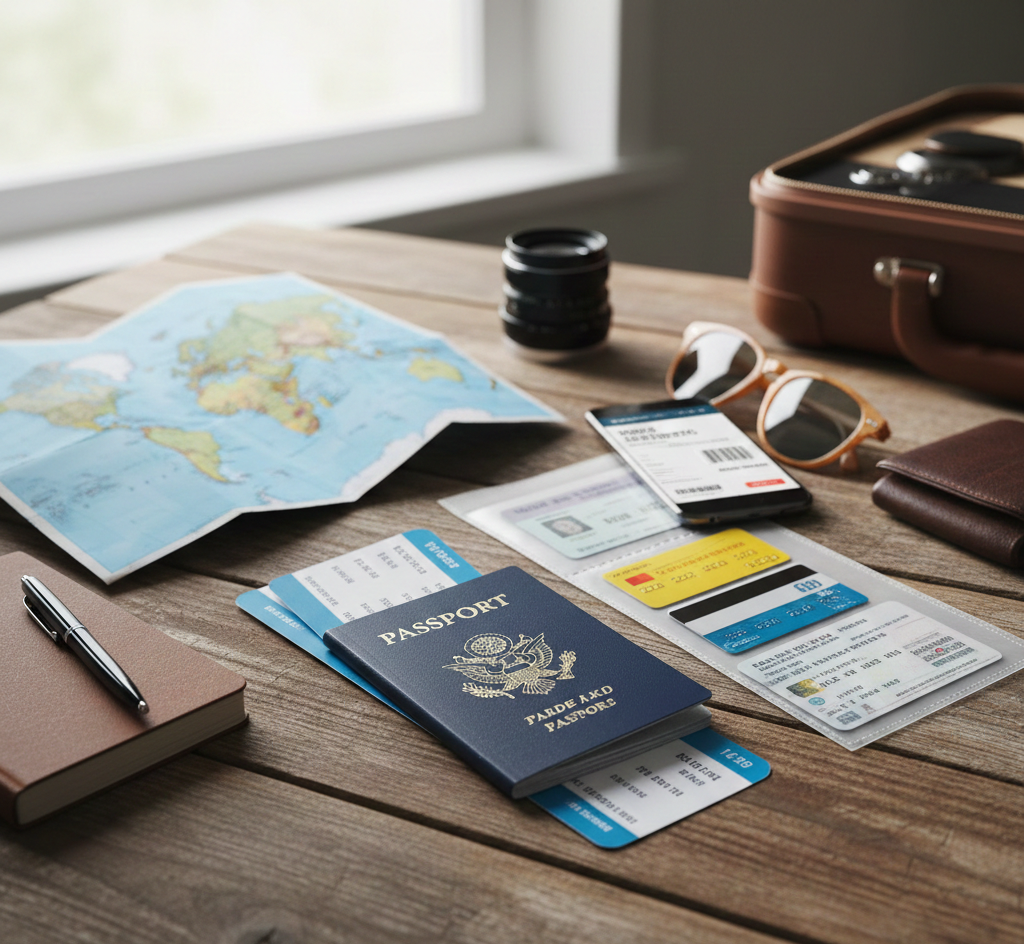
Most travel disasters don’t begin at the airport gate. They begin much earlier, quietly, when someone assumes they “probably have everything” and skips checking their documents properly. Missing paperwork is one of the most common reasons trips get delayed, cancelled, or turned into stressful messes.
A forgotten ID, an expired passport, a visa printed but not saved, or an insurance document buried somewhere in an inbox can unravel months of planning in minutes. This is why having a clear travel documents checklist matters more than almost anything else you do before traveling.
This guide is designed to be your calm, reliable reference. Whether you are traveling domestically or internationally, solo or with family, this checklist walks you through every document you might need, why it matters, and how to organize it so nothing slips through the cracks.
Why a Travel Documents Checklist Is So Important
Travel documents are not optional accessories. They are permissions. Every major step in travel requires proof. Airlines need proof of identity and tickets. Hotels need booking confirmation. Immigration needs passports, visas, and sometimes financial proof. Insurance companies need policy numbers. Authorities need documents before they offer help.
Beginners often underestimate how often documents are checked. It is not just once. Documents are checked multiple times at different points by different people. The more prepared you are, the smoother everything feels.
A checklist removes guesswork. It turns anxiety into certainty and preparation into confidence.
Essential Travel Documents for All Travelers
Some documents are required regardless of where or how you travel. These are the foundation.You need a valid government-issued photo ID. This could be a national ID card, driver’s license, or passport, depending on your destination and mode of transport.
You need proof of travel. This includes flight tickets, train tickets, bus bookings, or any confirmation that shows where you are going and when.Accommodation proof is equally important. Hotels, hostels, or homestays usually require confirmation details at check-in, and immigration may ask for them too.
Emergency contact information should always be accessible. This includes phone numbers of family members or trusted contacts back home.
Travel Documents Checklist for Domestic Travel
- Domestic travel is simpler, but it still requires preparation.
- Carry a valid photo ID accepted by transport authorities. Airlines, trains, and hotels will verify identity even for domestic trips.
- Keep your travel tickets easily accessible. Digital tickets are usually accepted, but screenshots are safer than relying on live apps.
- Hotel booking confirmations should be saved offline. Even budget accommodations often ask for proof of booking.
- Payment proof or receipts can be useful in case of disputes or system errors.
Domestic travel feels relaxed until something goes wrong. Documents prevent small issues from turning into delays.
Travel Documents Checklist for International Travel
International travel adds layers of documentation. This is where checklists become essential rather than helpful.
- A valid passport is non-negotiable. Check expiration dates carefully. Many countries require your passport to be valid for at least six months beyond your travel dates.
- A visa may be required depending on your nationality and destination. Some visas are electronic, some are stamped, and some are issued on arrival. Always confirm requirements in advance.
- Immigration forms may be required on arrival or departure. Some are digital, some are paper-based.
- Proof of onward or return travel is commonly requested. This shows you intend to leave the country within the permitted period.
- Accommodation details and proof of funds may also be checked at immigration.
Passport Checklist Before International Travel
- Your passport deserves special attention because it is the single most important travel document.
- Check the validity date. If your passport expires within six months, renew it before booking international travel.
- Check for blank pages. Many countries require at least one or two blank pages for entry and exit stamps.
- Inspect the physical condition of your passport. Torn pages, water damage, or loose binding can lead to denial of boarding.
- Carry multiple copies. Keep one physical copy in your luggage and digital copies stored securely online and offline.
Visa Documents Checklist
If your destination requires a visa, this checklist becomes critical.
- Carry your approved visa, whether electronic or physical. Print electronic visas even if digital copies are accepted.
- Check visa validity dates carefully. Validity is not the same as permitted stay duration.
- Carry supporting documents used during visa application, such as hotel bookings, return tickets, and financial proof. Immigration officers may ask for them.
- Keep visa copies separate from your passport in case of loss.
Flight-Related Documents Checklist
Flights involve multiple document checks, often under time pressure.
- Your e-ticket or booking confirmation should be saved offline. Boarding passes may be digital or printed depending on airline and airport.
- If you have completed online check-in, keep confirmation handy.
- Review baggage rules and keep proof of baggage allowance. This helps avoid disputes at the airport.
- For connecting flights, carry transit visas or documents if required.
Hotel and Accommodation Documents Checklist
Accommodation documents are not just for check-in.
- Carry booking confirmation showing your name, stay dates, and payment status.
- Save the hotel address and contact number. This helps with transport, immigration questions, and emergencies.
- If staying in a homestay, keep host details and communication records.
- Payment receipts are useful if there are billing disagreements.
Health and Insurance Documents Checklist
Health-related documents are often overlooked until they are urgently needed.
- Travel insurance policy details should be accessible offline. Save policy numbers and emergency contact numbers.
- Carry medical prescriptions if you take regular medication. Some countries require proof for certain medicines.
- Vaccination certificates may be required for specific destinations or during outbreaks.
- Emergency medical information such as allergies or conditions should be easily accessible.
Financial and Supporting Documents Checklist
Money-related documents matter more than people realize.
- Carry debit and credit cards that work internationally if applicable. Inform banks about travel to avoid blocks.
- Keep some cash in local or widely accepted currency.
- Bank statements or proof of funds may be required during visa checks or immigration.
- Keep financial documents secure and distributed across bags.
Digital Travel Documents Checklist
Digital organization is just as important as physical preparation.
- Store copies of all documents in cloud storage that you can access from any device.
- Email copies to yourself so they are searchable even without cloud access.
- Save screenshots of critical documents like tickets, visas, and hotel bookings.
- Protect your phone with passwords and backups. Your phone often becomes your document hub.
Travel Documents Checklist for Special Situations
Different types of travel require slight adjustments.
- Solo travelers should keep extra copies and share itineraries with someone back home.
- Family travelers should carry documents for all members, including children’s IDs or birth certificates if required.
- Students traveling abroad should carry admission letters, student visas, and institution contact details.
- Business travelers should carry invitation letters, company details, and work-related documents.
Common Travel Document Mistakes to Avoid
One of the biggest mistakes is assuming digital access will always work. Internet connectivity is not guaranteed.
Another mistake is carrying expired or nearly expired documents.
Many travelers forget to check visa conditions carefully, leading to overstays or denied entry.
Poor organization causes panic. Documents buried deep in luggage waste time and energy.
How to Organize Travel Documents Properly
Use a simple folder system. One folder for identity documents, one for travel bookings, one for health and insurance.
Keep day-of-travel documents easily accessible. Do not pack them deep in checked luggage.
Separate copies across bags. Losing one bag should not mean losing everything.
Review your checklist one final time before leaving home.
Frequently Asked Questions About Travel Documents
Do I need printed copies of documents?
Printed copies are strongly recommended as backups.
What documents are checked at airports?
ID, tickets, boarding passes, passports, and visas depending on travel type.
What should I do if I lose my documents while traveling?
Contact local authorities, your embassy, and your insurance provider immediately.
How early should I prepare travel documents?
Start preparing as soon as travel is planned. Earlier is always better.
Preparation Is the Quiet Hero of Travel
Travel feels effortless when documents are handled well. A solid travel documents checklist removes uncertainty and replaces it with calm readiness.
You cannot control delays, weather, or crowds, but you can control preparation. Documents are the foundation of smooth travel, and when they are organized, everything else flows more easily.
Before you zip your bag and head out, pause, check your documents one last time, and travel knowing you are ready.