Everyone remembers their first real trip. Not the school picnic or the family wedding travel, but the one where you were responsible for yourself. The planning. The packing. The fear of missing a train, choosing the wrong hotel, or standing confused in a new place wondering what to do next.
If you are new to travel, it is normal to feel excited and anxious at the same time. Travel looks effortless on social media, but behind every smooth trip is preparation, mistakes, learning, and adaptation. This guide is written for beginners who want clarity, not chaos. It walks you through essential beginner travel tips that make your first journey simpler, safer, and more enjoyable.
You do not need to be fearless to travel. You only need to be prepared.
Understanding Travel as a Beginner
Travel feels overwhelming in the beginning because everything is unfamiliar. Airports have rules you don’t yet understand. Booking websites feel confusing. Packing feels like solving a puzzle without knowing the picture. Experienced travelers forget how confusing this stage can be, but every confident traveler once stood exactly where you are now.
As a beginner, your goal is not to travel like an expert. Your goal is to reduce uncertainty. That means choosing simple routes, safe accommodations, manageable schedules, and realistic expectations. Travel confidence does not appear overnight. It builds through experience, and your first trip is the foundation.
Another important mindset shift is understanding that mistakes are part of travel. Missing a bus, overpacking, or choosing the wrong café happens to everyone. These are not failures. They are lessons that quietly train you to become a better traveler.
Planning Tips for Beginner Travelers
Good planning is the biggest stress-reducer for first-time travelers. Planning does not mean controlling every minute. It means knowing enough to move confidently.
Choosing the Right Destination as a Beginner
As a beginner, choose familiarity over fantasy. A destination that speaks your language, has good transport, and receives tourists regularly is far easier to navigate. Domestic destinations are ideal for first-time travel because they remove cultural and logistical barriers.
If you want to travel internationally, choose countries known for tourism infrastructure, clear signage, and safety. Avoid destinations that require constant bargaining, complex transport changes, or remote navigation on your first trip.
Your first destination should feel like a gentle introduction, not a survival challenge.
How Long Should Your First Trip Be?
Short trips are best for beginners. A three to five day trip allows you to experience travel without exhaustion. Longer trips increase planning pressure, packing mistakes, and decision fatigue.
Short trips also make it easier to recover if something goes wrong. You learn quickly, return home, reflect, and improve for the next trip.
Beginner Travel Budgeting Tips
Budgeting gives you freedom, not restriction. When you know how much you can spend, you make decisions calmly instead of panicking.
Divide your budget into transport, accommodation, food, sightseeing, and emergencies. Always keep an emergency buffer that you promise yourself not to touch unless necessary. This mental safety net reduces anxiety dramatically.
Beginners often overspend trying to “make the trip worth it.” Remember, your first trip is about learning, not maximizing experiences.
Booking Tips Every Beginner Traveler Should Know
Booking travel can feel intimidating, but it becomes easier once you understand what to prioritize.
Transportation Booking Tips for Beginners
Book tickets early whenever possible. Early bookings give you better prices, more choices, and time to correct mistakes. Avoid last-minute bookings on your first trip.
If you are flying for the first time, arrive at the airport early. Read airline baggage rules carefully to avoid surprise fees. For trains and buses, book confirmed seats and avoid unreserved travel as a beginner.
Keep all booking confirmations saved offline. Internet connectivity cannot always be trusted.
Accommodation Tips for First-Time Travelers
Your accommodation affects your entire experience. For beginners, location matters more than luxury. Stay close to city centers, public transport, or major attractions.
Choose accommodations with strong reviews mentioning cleanliness, safety, and helpful staff. Ignore places with repeated complaints, even if they are cheaper. Peace of mind is worth the cost.
Hotels, homestays, and beginner-friendly hostels are good choices. Avoid isolated or poorly reviewed properties on your first trip.
Packing Tips for Beginner Travelers
Packing is where beginners often create unnecessary stress. The secret is simplicity.
Essential Packing Checklist for Beginners
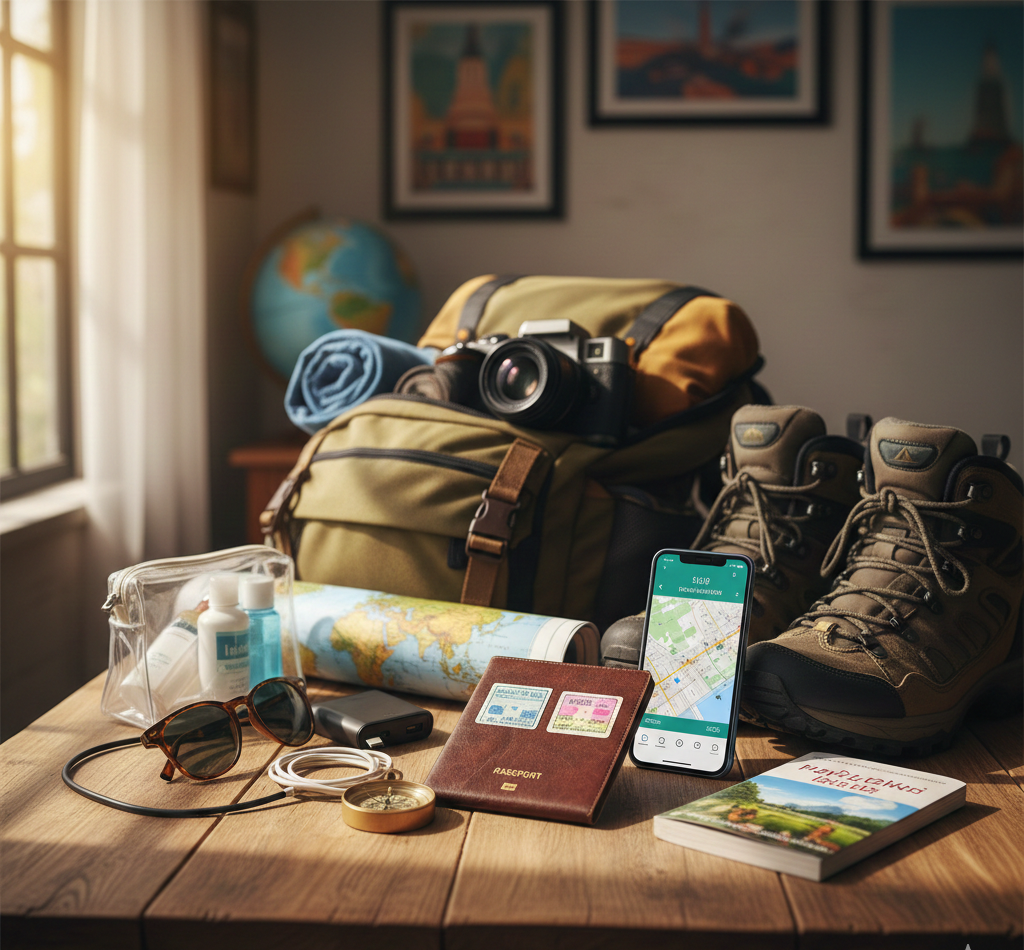
Pack clothes suitable for the weather and activities you plan. Comfortable footwear should be your priority. Carry basic toiletries, personal medicines, chargers, power banks, and reusable water bottles.
Documents deserve special care. Keep your ID, tickets, hotel details, and emergency contacts easily accessible. Carry both digital and physical copies.
A small day bag is essential for daily outings. It keeps your hands free and your belongings secure.
Packing Mistakes Beginners Always Make
Overpacking is the most common mistake. Beginners pack for every possible scenario instead of the likely ones. Heavy bags slow you down, tire you out, and complicate transport.
Another mistake is ignoring comfort. Fashion fades quickly when your feet hurt or your bag strains your shoulders. Comfort helps you enjoy travel longer and better.
Beginner Travel Safety Tips
Safety concerns often stop people from traveling, but awareness goes a long way.
Staying Safe While Traveling
Stay alert in unfamiliar places. Avoid flashing expensive items. Be cautious with strangers who offer unsolicited help. Trust your instincts. If something feels off, step away.
Use reliable transport. Avoid unlicensed taxis or poorly lit routes, especially at night. Choose accommodations with secure entry and good reviews.
Share your itinerary with someone you trust. Regular check-ins provide reassurance for both you and your loved ones.
Health and Emergency Preparedness
Carry essential medicines and prescriptions. Do not ignore travel insurance, especially for beginners. It protects you from medical emergencies, cancellations, and unexpected disruptions.
Know the local emergency numbers of your destination. Keep them saved offline. Small preparations prevent big panic.
Beginner Travel Tips for Solo Travelers
Solo travel can be deeply empowering, but it requires self-awareness. If you are traveling alone for the first time, choose destinations popular among solo travelers. These places tend to be safer and more social.
Stay in accommodations where interaction is easy but optional. Respect your comfort level. You do not need to socialize constantly to enjoy solo travel.
Solo travel teaches you to rely on yourself. With each decision, your confidence grows. Start small, and let experience guide you.
Common Beginner Travel Mistakes and How to Avoid Them
One common mistake is overplanning. Packing every hour with activities leaves no room for rest or spontaneity. Travel fatigue is real, especially for beginners.
Another mistake is underplanning. Showing up without basic research creates stress and confusion. Balance is key.
Comparing your trip to others is also harmful. Travel is personal. Your experience does not need to look impressive to be meaningful.
Ignoring local culture can lead to uncomfortable situations. Learn basic customs, dress appropriately, and observe before acting.
How Beginners Can Actually Enjoy Travel
Enjoyment comes from presence, not perfection. Slow down. Sit somewhere unfamiliar and observe. Let places reveal themselves instead of rushing through them.
Accept uncertainty. Not everything will go according to plan, and that is okay. Flexibility is one of the most valuable travel skills.
Document memories if you like, but don’t experience everything through a screen. Some moments are meant to live quietly.
Beginner Travel Tips After You Reach Your Destination
Once you arrive, take time to settle in. Learn the neighborhood around your accommodation. Identify nearby stores, transport stops, and safe walking routes.
Plan your days loosely. Leave room for rest and exploration. Eat where locals eat. Ask questions respectfully.
Stay organized. Return important items to the same place daily. Simple habits prevent unnecessary stress.
Frequently Asked Questions About Beginner Travel
Is there a perfect age to start traveling?
There is no perfect age. The best time to start is when curiosity outweighs fear.
Is traveling alone safe for beginners?
Yes, with proper planning, safe destinations, and awareness.
How much money should beginners carry?
Carry enough for daily expenses plus an emergency buffer. Avoid carrying all cash in one place.
What if plans change unexpectedly?
Adapt. Travel teaches flexibility. Most problems have solutions.
Every Traveler Starts as a Beginner
No one is born knowing how to travel. Confidence comes from doing, not waiting. Your first trip does not need to be grand. It needs to be intentional.
With the right beginner travel tips, preparation, and mindset, travel becomes less intimidating and more rewarding. Each journey makes the next one easier.
The world does not require you to be fearless. It only asks you to begin.