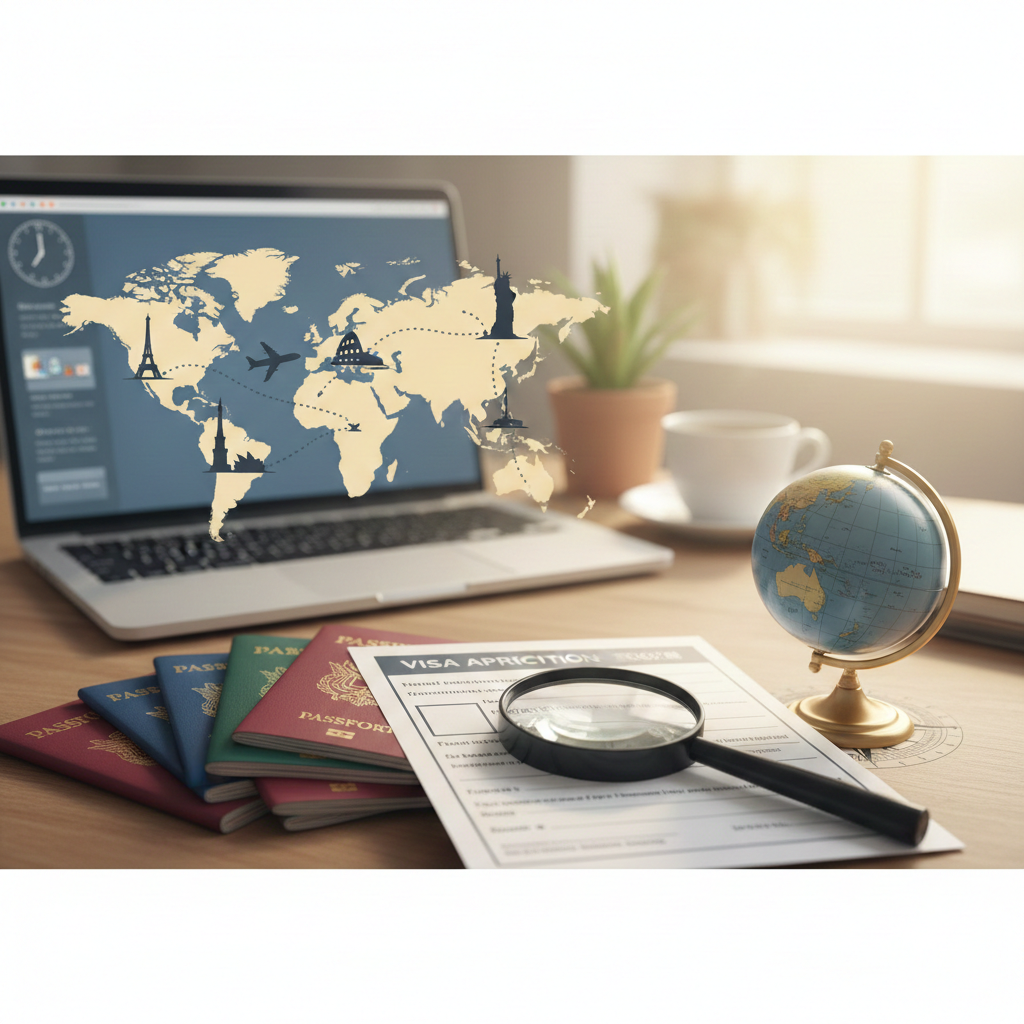
For many people, international travel does not begin with flights or hotels. It begins with a form. A form filled with questions that feel strangely serious for something as joyful as travel. Where are you going? Why are you going? How long will you stay? How much money do you have? Will you return?
This is where hesitation creeps in. Tourist visas feel intimidating because they sit at the intersection of dreams and rules. One wrong document, one unclear answer, and the entire plan feels fragile. But here’s the truth most people learn only after their first successful application: tourist visas are not mysterious. They are structured.
This tourist visa guide is written for beginners who want clarity instead of confusion. It explains what a tourist visa is, who needs one, how to apply, what documents matter, why visas get rejected, and how to approach the process with confidence rather than fear.
What Is a Tourist Visa? A Simple Explanation
A tourist visa is official permission granted by a foreign country that allows you to enter for leisure purposes. This includes sightseeing, vacations, visiting friends or family, attending cultural events, or short recreational stays. A tourist visa does not allow you to work, study long-term, or conduct business activities.
Think of a tourist visa as a temporary invitation. It tells immigration authorities that you have a clear purpose, a limited stay, and the intention to leave when your visit ends. This intent is the core of every tourist visa decision.
Many beginners assume that tourist visas are complicated because they involve embassies and documents. In reality, most tourist visas follow the same logic worldwide. Countries want to ensure that visitors are genuine tourists who will respect entry rules.
Who Needs a Tourist Visa?
Whether you need a tourist visa depends on three main factors: your nationality, your destination, and your length of stay. Some passports allow visa-free access to many countries, while others require visas for most destinations.
Visa-free travel means you can enter without applying in advance. However, visa-free access usually comes with strict stay limits. If your destination does not offer visa-free access for your nationality, you must apply for a tourist visa.
The safest way to confirm visa requirements is to check official embassy or government immigration websites. Relying on outdated blogs or social media posts often leads to misinformation.
Types of Tourist Visas Explained
Tourist visas are not all the same. Understanding the type you are applying for helps avoid mistakes.
A single-entry tourist visa allows you to enter the country once. If you leave, you cannot re-enter without a new visa.
A multiple-entry tourist visa allows you to enter and exit multiple times within the visa’s validity period.
Short-term tourist visas are usually valid for days or weeks, while long-term tourist visas may allow extended stays with conditions.
Tourist visas can be issued as traditional stamped visas, electronic visas, or visas on arrival. Each type has different processes and timelines.
Beginners should always apply for the visa type that exactly matches their travel plan. Over-applying or under-applying creates problems.
How to Apply for a Tourist Visa: Step-by-Step Guide
Tourist visa applications feel stressful mainly because people don’t understand the sequence. Once you know the steps, the process becomes manageable.
The first step is identifying the correct visa category and application method. Some countries accept online applications, while others require embassy appointments.
Next comes form filling. Visa application forms must be completed carefully. Every answer should be truthful, clear, and consistent with your documents. Guesswork leads to rejection.
After submitting the form, you gather and submit documents. Some applications require biometrics, photographs, or interviews.
Finally, you wait for processing. Processing times vary widely, so beginners should apply well in advance of travel dates.
Documents Required for a Tourist Visa
Documents are the backbone of any tourist visa application. They exist to prove three things: identity, intent, and financial stability.
Your passport must be valid, usually for at least six months beyond your travel dates. It should also have blank pages.
The visa application form must be filled accurately and completely.
Photographs must meet specific size and background requirements. Incorrect photos are a common reason for delays.
Travel itinerary shows your planned dates and movement. This includes flight reservations or travel plans.
Accommodation proof shows where you will stay. Hotel bookings or invitation letters are commonly accepted.
Financial proof demonstrates that you can support yourself during the trip. Bank statements are usually required.
Travel insurance may be mandatory or strongly recommended. It shows preparedness and responsibility.
Tourist Visa Fees Explained
Tourist visa fees vary by country and visa type. Some visas are inexpensive, while others cost significantly more.
Fees are usually non-refundable, even if your visa is rejected. This is why careful preparation matters.
In addition to visa fees, some applications include service charges, biometric fees, or courier charges.
Beginners should budget for visa costs early and avoid last-minute surprises.
Common Reasons Tourist Visas Get Rejected
Visa rejection is one of the biggest fears for beginners, but rejections usually happen for clear reasons.
Incomplete or inconsistent documents are the most common cause. Missing bank statements, unclear travel plans, or incorrect forms raise red flags.
Insufficient financial proof suggests that you may not be able to support yourself during travel.
Unclear travel intent makes authorities question whether you plan to overstay or work illegally.
Weak travel history can affect applications, especially for stricter countries, but it is not an automatic rejection.
Passport issues, such as damage or low validity, also lead to refusal.
Understanding these reasons helps you avoid them.
How to Increase Your Tourist Visa Approval Chances
Preparation is the most powerful tool in visa applications.
Apply early. Rushed applications are often careless.
Keep your documents organized and consistent. Everything should tell the same story.
Explain your travel purpose clearly. A simple, honest itinerary works better than exaggerated plans.
Show strong ties to your home country. Employment, family, or studies help demonstrate intent to return.
Never provide false information. Dishonesty almost always leads to rejection and long-term consequences.
Tourist Visa Rules Beginners Often Miss
One of the most common misunderstandings is confusing visa validity with length of stay. A visa may be valid for months, but your allowed stay may be much shorter.
Overstaying a tourist visa, even unintentionally, can result in fines, bans, or future visa difficulties.
Tourist visas usually prohibit employment. Even unpaid or freelance work can violate conditions.
Some tourist visas require registration or additional checks after arrival. Ignoring these rules causes problems.
Tourist Visa Tips for First-Time International Travelers
Start early and stay organized. Use folders, both physical and digital, for documents.
Keep copies of everything. Carry backups separately.
Prepare for immigration questions. Be calm, honest, and clear.
Do not over-explain. Answer what is asked.
Remember that visas are not judgments about you. They are administrative decisions based on rules.
What to Do If Your Tourist Visa Gets Rejected
A rejection feels discouraging, but it is not the end.
Read the rejection reason carefully. Most embassies provide explanations.
Do not reapply immediately without fixing the issue. Strengthen your documents first.
Sometimes waiting and applying again with improved preparation leads to approval.
Seek official guidance if available. Avoid agents promising guaranteed visas.
Frequently Asked Questions About Tourist Visas
Is tourist visa approval guaranteed?
No. Approval depends on documentation, intent, and eligibility.
Can I work on a tourist visa?
No. Tourist visas strictly prohibit work.
Can I convert a tourist visa to another visa?
Usually no. Most countries require you to apply from your home country.
How early should beginners apply for a tourist visa?
As early as possible once travel plans are clear.
Tourist Visas Are Gateways, Not Barriers
A tourist visa is not meant to block travel. It is meant to manage it. When you understand the rules, respect the process, and prepare thoughtfully, tourist visas become predictable rather than frightening.
This tourist visa guide exists to replace anxiety with clarity. Travel begins long before the plane takes off. It begins when you decide to understand the process instead of fearing it.
Apply carefully, stay honest, and let preparation carry you forward. The world is far more accessible than it first appears.